
Site Specific: Unit 20
Studio 2AM - Tbilisi, Georgia, 2025
Founded by the multi-skilled and multidisciplinary Megi Davitidze and Anna Chelidze, Studio 2AM is based in Tbilisi, Georgia and has completed a number of residential projects in the city over the past few years.
These small-scale interventions exhibit a strong desire to provide as much as possible through a minimum of means and yet the end results don’t merely present domestic life a kind of ‘existenzminimum‘.
The otherwise modest scale of the apartments is leavened by the presence of figurative elements, ranging from kitchen or wardrobe-sized objects down to the scale of side-tables, handles and candle holders. Often expressed in a single material, these objects provide intimate, almost theatrical moments of inhabitation that populate the otherwise pared-back and minimal interiors.
2AM With Unit 20, located in the heart of Mtatsminda, Tbilisi, we continue a series of projects that reconsider what it means
to design for the contemporary rental market and, in this case, within historically charged contexts. Housed in a residential building of significant urban and cultural value, officially recognised as a heritage monument, the project engages in a careful dialogue between past and present.
Respect for the building’s history is a key design principle. The brickwork and the placement of stones is read as a material memory embedded in the urban fabric. Interestingly, this narrative extends into the interior; a piece of an existing brick wall was deliberately left exposed and untouched, acting as a quiet yet powerful reminder of the site’s past, in order to embrace the memory. Rather than competing with old elements, the new interventions complement them, allowing old and new to coexist harmoniously.
The interior is conceived around a restrained material palette, centered almost exclusively on plywood. The material is explored through variations in form, texture, and tone. This approach creates a sense of continuity while demonstrating the material’s adaptability and expressive potential.
With a compact footprint of just 38 square meters, the apartment is organized as an open-plan interior that feels spatially generous and highly functional. Rather than treating size as a limitation, the design uses clarity of layout and precision of detailing to accommodate the full spectrum of everyday activities without compromise. Custom-built furniture defines distinct zones for resting, dining, hosting friends, or quietly reading, allowing the apartment to adapt seamlessly to different rhythms of daily life. Each piece is designed specifically for its location, often serving multiple functions at once - seating, storage - allowing the apartment to remain flexible and efficient.
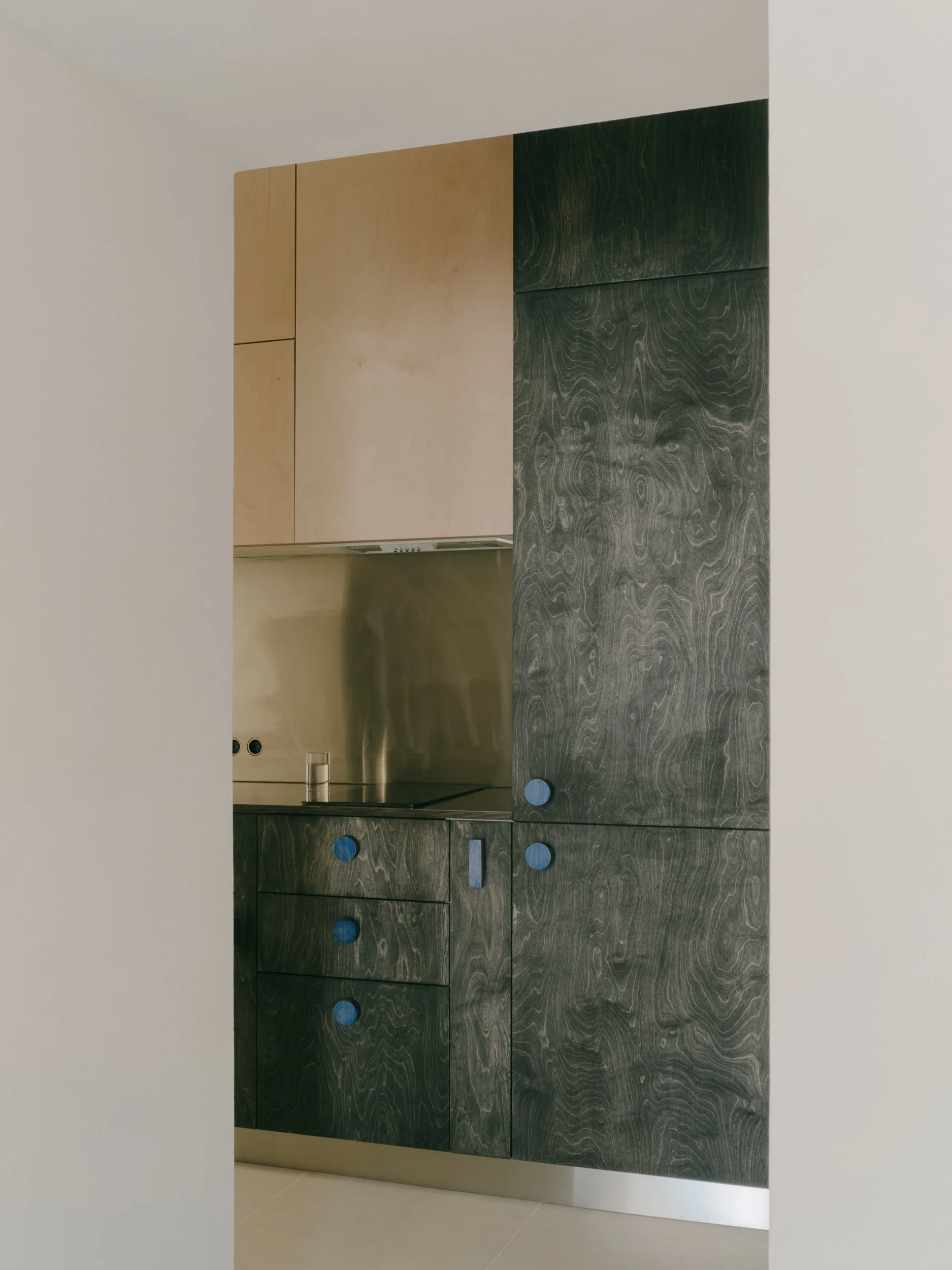
The blue table adds a subtle color contrast to the otherwise neutral interior. Placed at the center of the space, it functions as both a working surface and a visual anchor in the room. The blue used for the table is repeated in smaller details throughout the interior, such as the cabinet handles and the tile detail near the bed. This repetition creates a subtle connection between different elements of the space. Used sparingly, it helps tie the space together without dominating the material palette.
The use of blue goes beyond visual accent and extends into the tactile qualities of the interior. It is experienced through touch in multiple ways: the plywood handles, the smooth table surface, and the hand-sewn knitted bedcover. These elements introduce varied textures while remaining connected through a shared color - each offer a distinct tactile quality, adding another layer to how the space is used and felt.
The apartment’s material strategy plays with scale and repetition. Plywood, for example, is applied both on large surfaces and in smaller accents. Stainless steel follows the same principle: it covers major areas in the bathroom, kitchen, and wardrobe, while also appearing in smaller, refined details such as the bedside table, handles, candle holders, and entrance shelves. This creates a cohesive dialogue between large planes and subtle touches throughout the space. It’s interesting how the same material feels different at each scale. This approach highlights how materials can transform depending on their scale.
The apartment’s generous views became an integral part of the spatial composition. Seating was integrated along the windows, transforming the views into an everyday experience and reinforcing the connection between interior life and the surroundings. The result is a space that feels both grounded in history and responsive to contemporary modes of living.
NOTES
Many thanks to Megi Davitidze for help in posting this project.
Photography © Grigory Sokolinski.
For more work by Studio 2AM visit their website here.
Posted 5th February 2026.